Navigating an annual fire door inspection checklist is essential for building owners, safety directors, and facility managers responsible for life safety compliance. Under NFPA 80 Standard for Fire Doors and Other Opening Protectives, commercial swinging fire doors and rolling shutters must be inspected and tested at least once every 12 months. Using a rigorous fire door inspection checklist guarantees that fire-rated assemblies perform as life-saving barriers during an emergency.
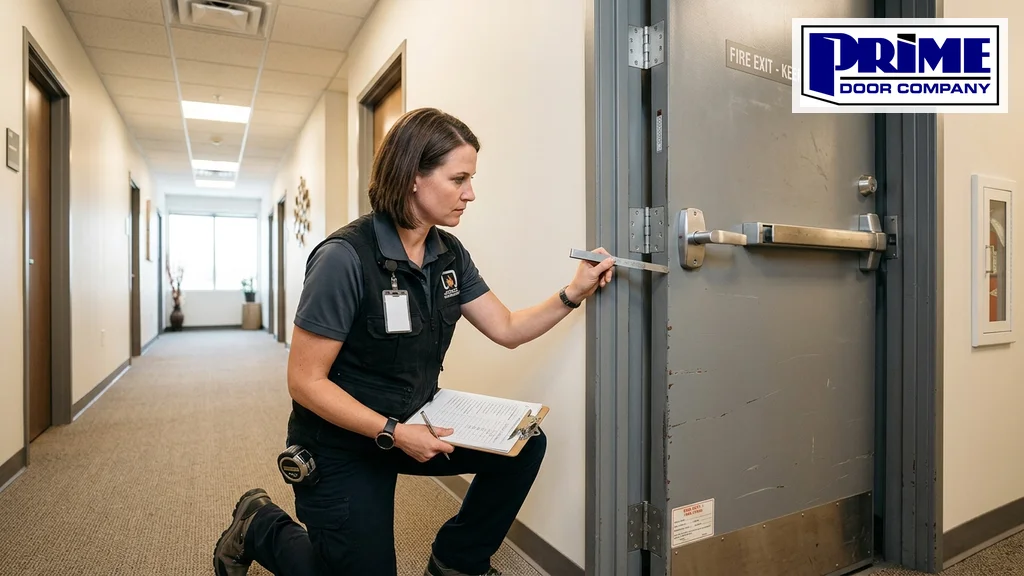
Core Mandates on the Fire Door Inspection Checklist
- Mandatory 12-Month Cycle: NFPA 80 Section 5.2.1 requires an annual documented fire door inspection checklist for all swinging and sliding fire door assemblies.
- Qualified Personnel: Inspections must be conducted by individuals with documented knowledge of door operating hardware and Underwriters Laboratories (UL) listing requirements.
- Immediate Correction: If any item on the fire door inspection checklist fails, the assembly must be repaired or replaced without delay.
Understanding NFPA 80 Fire Door Inspection Requirements
Fire door assemblies are engineered passive fire protection systems. The hollow metal or solid core wood slab, steel frame, hinges, positive latching lockset, door closer, and perimeter seals function as a unified barrier. A single failed latch or excessive clearance gap can allow superheated gases and toxic smoke to breach egress corridors in minutes.
Authorities Having Jurisdiction (AHJs), including Ohio state fire marshals and municipal building officials, enforce strict annual audit standards. Keeping a completed fire door inspection checklist on file protects building occupants and shields facility owners from code violation penalties or insurance liability.
7 Best Steps on the Fire Door Inspection Checklist
Step 1: Inspect and Verify Physical Certification Labels
The first mandatory verification on your fire door inspection checklist is auditing physical certification labels:
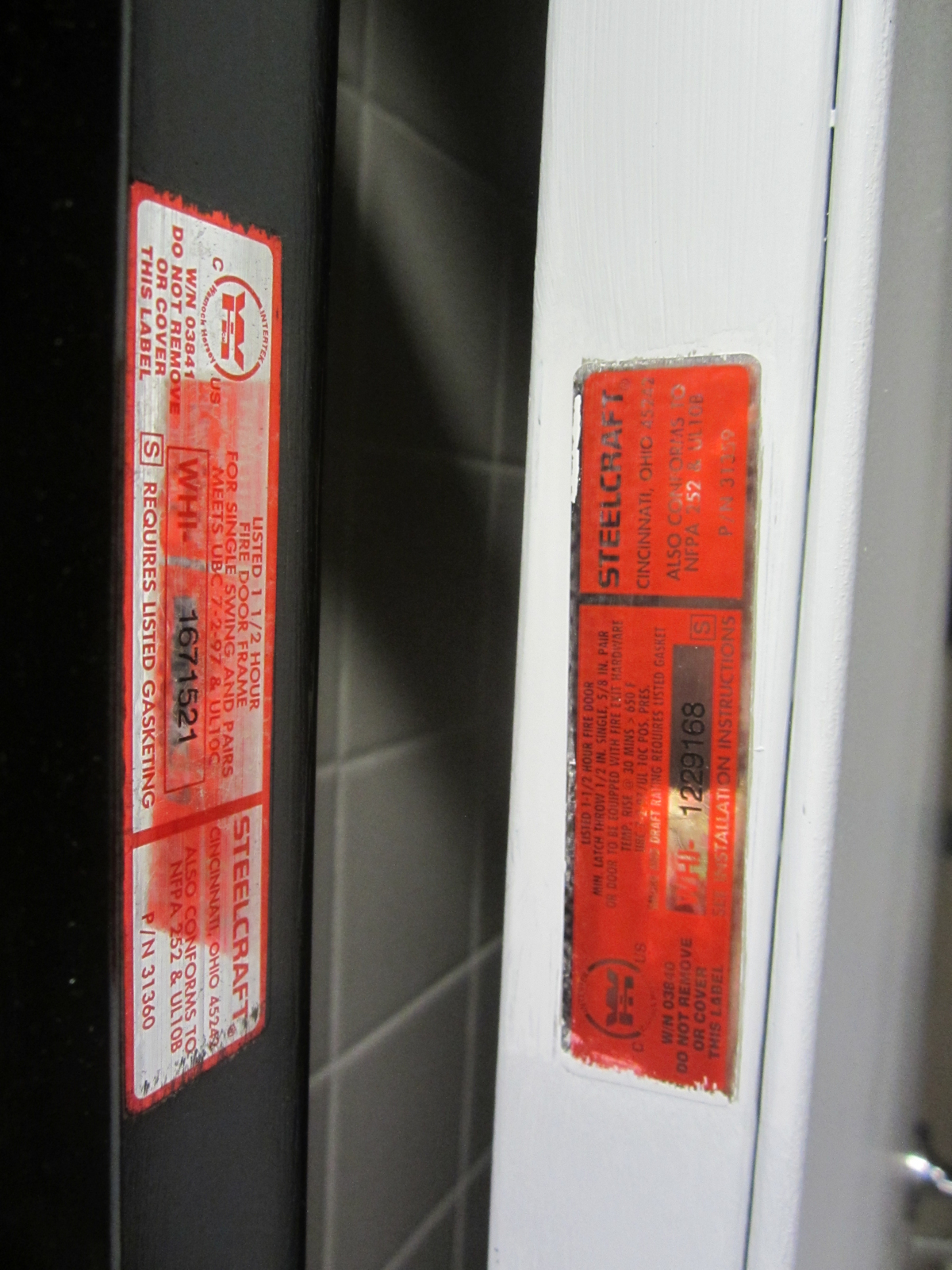
- Label Legibility: Both the door slab and frame must carry permanent metal labels from certified agencies like UL, Warnock Hersey (WH-Intertek), or FM. Labels must never be painted over or obscured.
- Hourly Ratings: Verify that the hourly fire protection rating (20-minute, 45-minute, 90-minute, or 3-hour) is legible and that the frame rating meets or exceeds the door rating.
- Label Condition: Damaged or missing labels require field evaluation by a certified agency to recertify compliance on your fire door inspection checklist.
Step 2: Measure Clearances and Perimeter Opening Gaps
Clearance measurement is one of the most critical steps on any fire door inspection checklist. Gaps exceeding code limits permit fire blow-through:
- Top and Side Jamb Clearances: Clearances between the door edge and frame must not exceed 1/8 inch (plus or minus 1/16 inch for steel hollow metal doors; 1/8 inch for wood doors).
- Meeting Stile Gaps: On pairs of swinging fire doors, the gap between meeting edges must not exceed 1/8 inch.
- Bottom Undercut: Clearance between the bottom of the door slab and the finished floor or threshold must not exceed 3/4 inch (or 3/8 inch if non-combustible threshold is absent).
- Use a calibrated taper gauge to log clearance dimensions accurately on your fire door inspection checklist.
Step 3: Test Positive Latching and Strike Plate Engagement
Under NFPA 80, every fire door must positively latch automatically upon closing. An unlatched door will blow open under positive pressure during a structural fire:
- 6-Inch Latch Test: Open the door approximately 6 inches and release it. The latch bolt must throw completely into the strike plate without manual assistance.
- Full Travel Swing Test: Open the door to its full swing angle. The door must close smoothly and latch securely.
- Lockset Condition: Inspect lock mechanisms for binding or wear. Upgrade compromised hardware with ANSI Grade 1 commercial door locks certified for fire exit assemblies.
- Auxiliary manual deadbolts or unlisted slide bolts are strictly forbidden on your fire door inspection checklist.
Step 4: Verify Door Closer Operation and Closing Speed
Self-closing devices must control the door throughout its entire swing cycle:
- Closing Time: Verify that the door closer takes at least 5 seconds to travel from 90 degrees open to 12 degrees before latching, satisfying both ADA accessibility and NFPA 80 standards.
- Hydraulic Fluid Leaks: Any oil residue on the closer body indicates internal seal failure, requiring immediate closer replacement on your fire door inspection checklist.
- Door Coordinators: On double door openings with overlapping astragals, ensure the coordinator properly sequences the leaves so the inactive leaf closes before the active leaf.
Step 5: Inspect Hinges, Fasteners, and Door Alignment
Hinges carry the entire operating load of the door assembly. Sagging hinges cause perimeter binding and latch failures:
- Steel Ball-Bearing Construction: All hinges on fire-rated doors must be steel ball-bearing units. Brass, bronze, or die-cast zinc hinges melt under high temperatures and fail your fire door inspection checklist.
- Fastener Integrity: Verify that every screw hole is secured with the correct manufacturer-specified steel machine screw. Missing or loose fasteners must be replaced immediately.
- Upgrade high-frequency openings with heavy-duty commercial door hinges to eliminate door sag.
Step 6: Audit Vision Lites, Glazing, and Perimeter Gasketing
Glass and perimeter seals must contain heat and smoke during an egress event:
- Fire-Rated Glazing: Ensure all vision lites are stamped with permanent ceramic or wireless fire-rated glass markings.
- Glazing Frame Clips: Check that all steel lite frame screws are tightly fastened without loose glass panes or rattle.
- Intumescent and Smoke Gasketing: Inspect perimeter smoke seals for tears, flattening, or missing sections. Unapproved foam weatherstripping violates your fire door inspection checklist.
Step 7: Document Findings and Maintain Inspection Records
An inspection is legally invalid without thorough written records:
- Audit Record Retention: NFPA 80 Section 5.2.2 requires completed inspection logs to be retained for at least 3 years and made available to the local AHJ upon request.
- Record Details: Document opening location, door ID, date of audit, inspector credentials, and records of any corrective actions taken on your fire door inspection checklist.
- For commercial facilities requiring third-party certification, Prime Door provides comprehensive certified fire door inspection services across Ohio.
Printable NFPA 80 Fire Door Inspection Checklist Matrix
| Checklist Item |
NFPA 80 Code Standard |
Acceptable Pass Criteria |
| 1. Door and Frame Labels |
NFPA 80 4.2.1 |
Labels attached, legible, not painted over |
| 2. Perimeter Clearances |
NFPA 80 6.3.1.7 |
Top/sides max 1/8 inch; bottom undercut max 3/4 inch |
| 3. Positive Latching |
NFPA 80 6.4.4 |
Latches fully from both full swing and 6-inch release |
| 4. Door Closer Operation |
NFPA 80 6.4.1 |
Self-closes completely; no hydraulic fluid leaks |
| 5. Hinge Fasteners |
NFPA 80 6.4.3 |
All screws intact and tight; steel ball-bearing hinges |
| 6. Vision Glazing |
NFPA 80 4.4.1 |
Fire-rated glass intact; all lite frame screws secure |
| 7. Auxiliary Devices |
NFPA 80 5.2.3 |
No kick-down door stops, wedges, or unapproved latches |
Common Violations Caught on a Fire Door Inspection Checklist
- Kick-Down Holders and Wedges: Propping fire doors open with wooden wedges or mechanical kick-down stops is the most frequent violation found on a fire door inspection checklist. Replace them with magnetic holders wired to the fire alarm system.
- Excessive Undercut Clearances: When flooring finishes change, bottom gaps frequently exceed the 3/4-inch limit. Install certified, surface-applied fire door bottom shoes listed for fire assemblies.
- Painted Certification Labels: Facility painters often overspray metal fire labels. Clean them with non-abrasive solvents or schedule certified field relabeling.
Frequently Asked Questions About the Fire Door Inspection Checklist
Who can perform an annual fire door inspection checklist audit?
NFPA 80 requires fire door inspections to be performed by individuals with documented knowledge and understanding of commercial door hardware. Facility staff can conduct monthly visual checks, but annual certification audits should be performed by certified door professionals.
How often does a rolling fire door need to be drop tested?
Rolling steel fire doors must undergo two consecutive drop tests every 12 months as part of the annual fire door inspection checklist to verify closing speed and proper governor reset.
What are the consequences of failing a fire door inspection checklist audit?
Failing an AHJ fire safety audit results in a formal Notice of Violation with a 15-to-30-day correction window. Unresolved deficiencies can lead to municipal fines, building closure, or invalidated fire insurance coverage.
Schedule a Certified Fire Door Inspection in Ohio
Ensure complete NFPA 80 compliance with professional commercial fire door inspections, code remediation, and hardware repair services from Prime Door.
Book an Inspection
Call (330) 754-2225