A fire door assembly is one of the most important and life-saving features in your commercial building. It’s a sophisticated system designed to contain smoke and fire, allowing occupants to exit safely during an emergency. However, it’s also one of the most common points of failure during a safety audit. A failed commercial fire door inspection can lead to significant fines, and more importantly, put lives at risk.
As a Youngstown-based business, we know that Ohio fire marshals are diligent about enforcing NFPA 80 standards. This article provides a simple, 5-point checklist for your own preliminary commercial fire door inspection, helping you spot the most common issues before they become major problems.
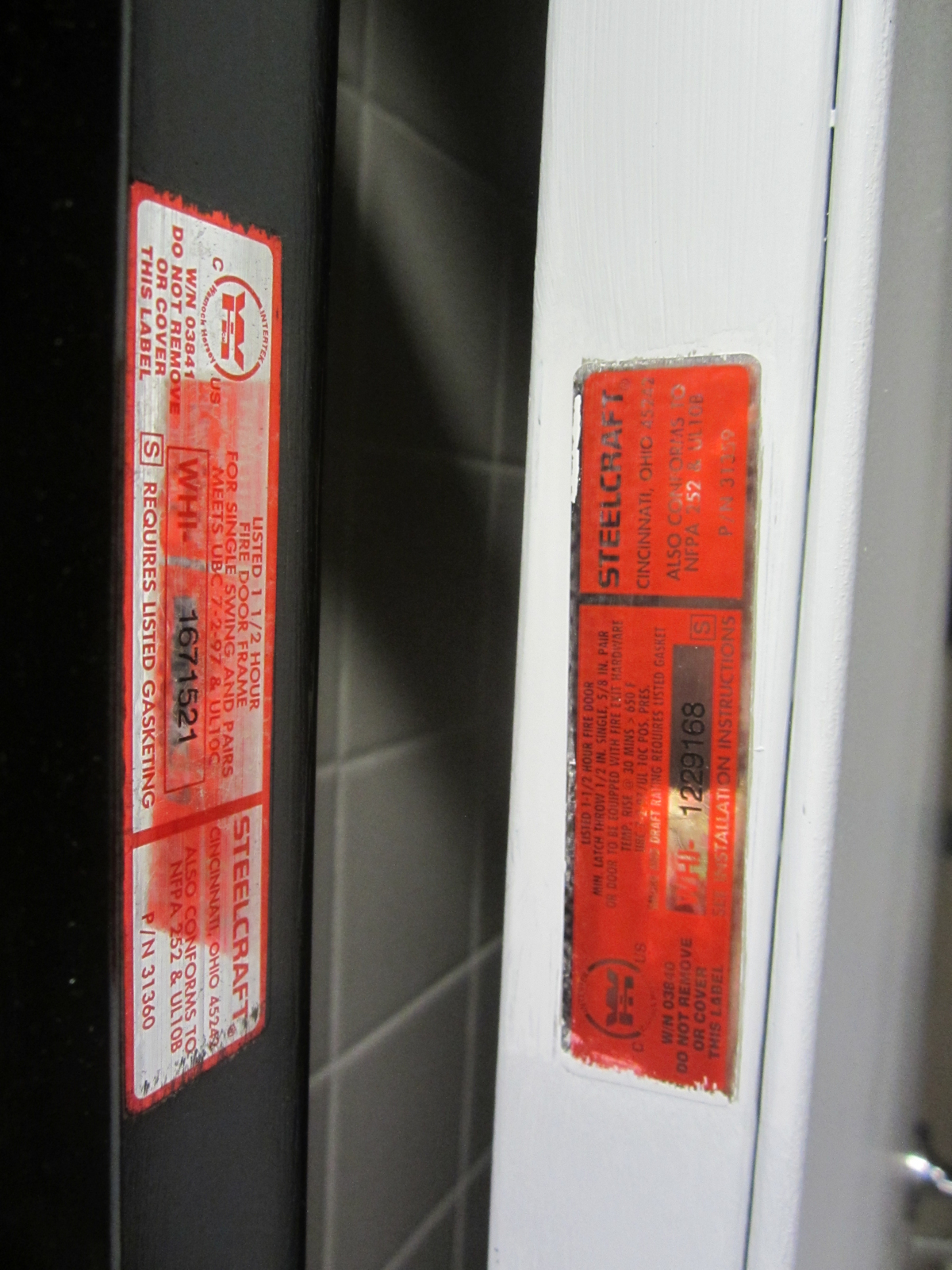
This is the fastest and easiest check. Every fire-rated door and frame must have a label from a certified testing agency (like UL or Intertek) permanently attached. This label is usually found on the hinge-edge of the door.
Is the label present on both the door and the frame?
Is it legible and not covered in paint?
If the label is missing or unreadable, the assembly is not compliant. It doesn’t matter if you know it’s a fire door; without the label, it won’t pass an official commercial fire door inspection.
A fire door is useless if it’s propped open. Per NFPA 80, every fire door must be self-closing and must latch positively.
Open the door fully and let it go. It should swing completely shut on its own and you should hear the latch “click” into the frame. If the door hangs open—even a little—or if the latch doesn’t engage, it’s a failure. This is often an issue with the door closer needing adjustment or replacement, a common finding during a professional commercial fire door inspection.
The gaps around the perimeter of the door are critical for preventing smoke from pouring through. The clearances between the door and the frame should not exceed 1/8″. An easy way to do a quick check is with a dime; its thickness is less than 1/8″.
Top & Sides: The gap should be 1/8″ or less.
Bottom: The gap between the bottom of the door and the threshold is typically larger, but should not exceed 3/4″.
If you can see significant light bleeding through, your gaps are likely too large and will be flagged.
Your door hardware is a key part of a successful commercial fire door inspection. Look for these key items:
Hinges: At least two hinges are required. They must be in good condition, with no missing screws or visible damage.
Door Closer: Is the closer leaking oil? This is a sign of failure.
Unauthorized Modifications: Look for any hardware that wasn’t part of the original, tested assembly. This includes things like manual deadbolts, surface bolts, or unapproved kick plates that have been screwed into the door. These can void the fire rating.
Finally, do a simple visual check of the entire opening.
Are there any holes or breaks in the surface of the door or frame? Even a small hole can compromise the assembly’s integrity.
Is the area clear? Ensure that nothing is blocking the door from opening or closing freely, such as furniture, equipment, or floor mats. These details are crucial for a successful commercial fire door inspection.
The National Fire Protection Association (NFPA) 80 standard is the foundation for all commercial fire door inspection requirements in Ohio. Under this standard, all fire door assemblies must be inspected and tested annually by individuals who are knowledgeable about the functioning of fire doors and the requirements of NFPA 80.
Ohio businesses are particularly subject to scrutiny because the Ohio Fire Code adopts NFPA standards as part of its building and fire safety regulations. This means that failure to maintain compliant fire door assemblies can result in:
For facilities such as hospitals, nursing homes, schools, and commercial buildings in Youngstown and throughout Ohio, annual fire door inspections are not optional — they are a legal requirement that protects both occupants and building owners.
After performing hundreds of certified fire door inspections across Ohio, our team at Prime Door has identified the most common deficiencies that cause doors to fail inspection:
Each of these deficiencies can be corrected by a qualified commercial door service provider. Prime Door offers complete fire door repair and replacement services for all deficiency types found during inspection.
While NFPA 80 requires annual inspections as a minimum, certain facilities and situations require more frequent attention:
Prime Door recommends that Ohio businesses maintain a fire door log documenting all inspections, repairs, and replacements. This log serves as evidence of compliance during fire marshal visits and insurance audits.
How much does a fire door inspection cost in Ohio?
The cost depends on the number of fire-rated openings in your facility. Contact Prime Door for a free assessment and quote tailored to your building.
Can I perform my own fire door inspection?
While building staff can perform the basic 5-point visual check described above, the official annual inspection required by NFPA 80 must be performed by a knowledgeable individual. Certified inspectors like those at Prime Door ensure that every aspect of the assembly is evaluated correctly.
What areas in Ohio does Prime Door serve?
Prime Door provides fire door inspection services throughout Ohio, including Youngstown, Cleveland, Akron, Canton, and surrounding areas. Contact us for service in your area.
How long does a fire door inspection take?
A typical inspection takes 5-10 minutes per opening. For a building with 50 fire doors, expect approximately one full day for the complete inspection and report.
Staying compliant with fire codes isn’t just about avoiding fines; it’s a fundamental part of responsible facility management. The National Fire Protection Association (NFPA) provides the comprehensive NFPA 80 standard that outlines all these requirements in detail.
If you spotted an issue during your 5-point check, don’t wait for an official notice. The team at Prime-Door provides certified fire door inspection services across the Youngstown, Ohio region. Our technicians can identify and repair any issues to ensure your facility is safe, secure, and fully compliant.
Contact us to schedule your professional inspection today.