
In a healthcare environment, a door is never just a door. It’s a critical component for patient safety, infection control, privacy, and accessibility. The healthcare door hardware chosen for a hospital, clinic, or assisted living facility must meet a far higher standard than typical commercial hardware. One wrong choice can compromise patient safety and lead to non-compliance issues.
From high-traffic emergency rooms to sensitive patient areas, every piece of hardware plays a vital role. Here are the seven essential types of hardware every facility manager should consider for their building.
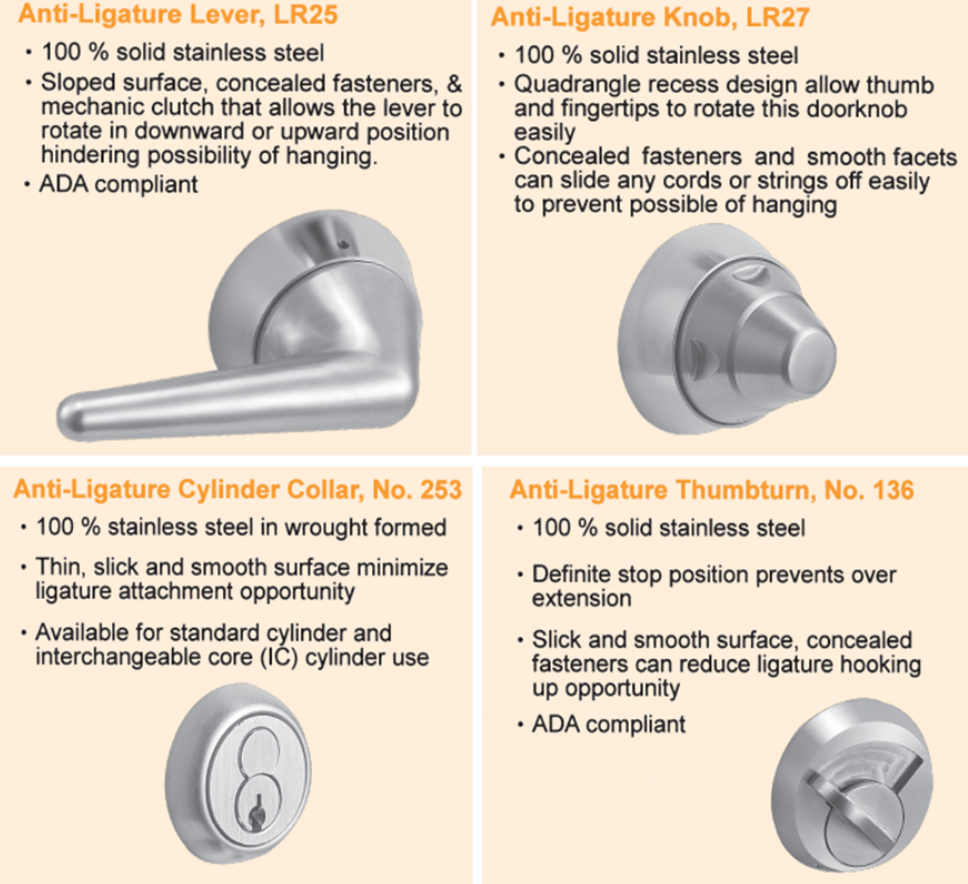
Patient safety is the absolute top priority, especially in behavioral health settings. Anti-ligature hardware is specifically designed to prevent any point where a cord, rope, or sheet could be attached, minimizing the risk of self-harm. This includes specialized handles, locks, and continuous hinges that are sloped, recessed, or designed without catch-points.
For infection control, hands-free operation is key. Push/pull latches allow staff to open doors with an elbow, arm, or hip, which is essential when their hands are full or when moving between sterile environments. This is a foundational piece of healthcare door hardware.
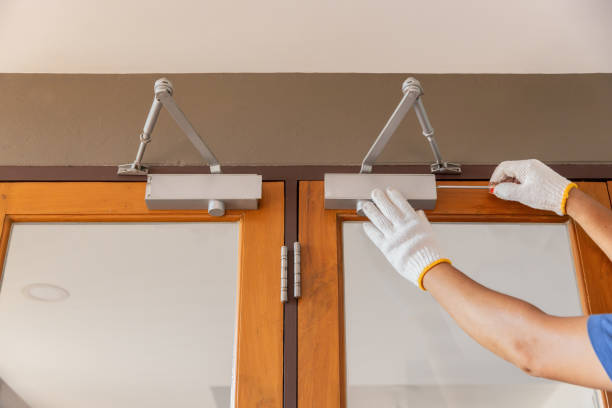
Hospital doors are subject to constant, heavy use from gurneys, wheelchairs, and foot traffic. A Grade 1 heavy-duty door closer is essential to ensure the door closes reliably every time. Features like delayed action are also critical, allowing more time for beds and equipment to pass through before the door begins to close.
Instead of standard butt hinges, continuous (or piano) hinges are often the superior choice for healthcare. They distribute the door’s weight evenly along the entire length of the frame, preventing sagging on heavy, lead-lined X-ray doors. They also eliminate the gap between the door and frame, a crucial safety feature that prevents patient fingers from being pinched.
Securing sensitive areas like pharmacies, patient record rooms, and nurseries is non-negotiable. Electrified hardware, including electric strikes and magnetic locks integrated with keypad or card-reader access control systems, provides a robust, auditable solution to control and monitor access.
Not all hospital departments have the same door hardware requirements. Here is a department-by-department breakdown to help facility managers and architects specify the right healthcare door hardware for each area:
Emergency departments require hardware that supports rapid access and lockdown capabilities. Recommended healthcare door hardware includes:
Patient room doors need to balance privacy, accessibility, and staff access. Key hospital door hardware includes:
Behavioral health facilities have the strictest hardware requirements in any healthcare setting:
Surgical suites require specialized hardware for both infection control and privacy:
The right hospital door frames and hardware must work together as a complete fire-rated assembly. Understanding frame requirements is essential:
Frame Types for Healthcare:
Fire Rating Requirements by Area:
Every piece of hardware installed in a fire-rated opening must be listed and labeled for that specific fire rating. Prime Door provides fire door inspection services to verify all assemblies remain compliant.
All healthcare facilities must meet ADA (Americans with Disabilities Act) requirements for door hardware. Key ADA requirements include:
For healthcare facilities, ADA compliance is not just a legal requirement — it directly impacts patient safety and mobility. Prime Door specifies ADA-compliant commercial door hardware for all healthcare projects.
Use this checklist when specifying healthcare door hardware for your facility:
Need help specifying healthcare door hardware for your Ohio facility? Contact Prime Door for a free consultation. We have 25+ years of experience supplying and installing hospital door hardware throughout Ohio.
The lower portion of a hospital door takes a beating from carts, gurneys, and wheelchairs. Heavy-duty kick plates, often extending higher up the door (armor plates), are essential to protect the door’s surface, prolong its life, and maintain a clean, professional appearance.
Proper sealing is critical for more than just energy efficiency. In healthcare, specialized gasketing is used to maintain positive or negative air pressure in isolation rooms and operating theaters, a critical component of infection control protocols.
Selecting the right healthcare door hardware is a complex task with serious implications. For expert guidance on ADA compliance and patient safety standards, the Facility Guidelines Institute (FGI) provides an invaluable resource.
At Prime-Door, we specialize in providing hardware solutions that meet the stringent demands of the healthcare industry in Youngstown and beyond. We can help you select the right products to ensure your facility is safe, accessible, and fully compliant.
Ready to upgrade your facility’s hardware? Contact us to schedule your professional inspection today. Configure your perfect door hardware and get a quote today.