For business owners in Youngstown, Ohio, our weather is no joke. The brutal winters, humid summers, and heavy rain can wreak havoc on a commercial building’s exterior. When it comes to your entryways, choosing the right door material is critical for long-term durability and performance. The two most common options are hollow metal and FRP (Fiberglass Reinforced Polymer), but the debate over FRP vs hollow metal doors often comes down to one key factor: the environment.
So, which material is the winning choice for your facility? This guide breaks down the pros and cons of each for our specific Ohio climate.
Hollow metal doors are the default choice for commercial construction for a reason. They are tough, reliable, and provide an incredible level of security and fire resistance.
Pros of Hollow Metal:
Unmatched Security: A steel door and frame provide the highest level of resistance to forced entry.
Fire Safety: Hollow metal doors and frames can be fire-rated for up to 3 hours, a critical requirement for many building codes.
Cost-Effective: For most standard applications, steel is the more budget-friendly option upfront.
Proven Durability: They can withstand decades of high traffic and physical abuse in schools, warehouses, and storefronts.
Cons in Ohio Weather:
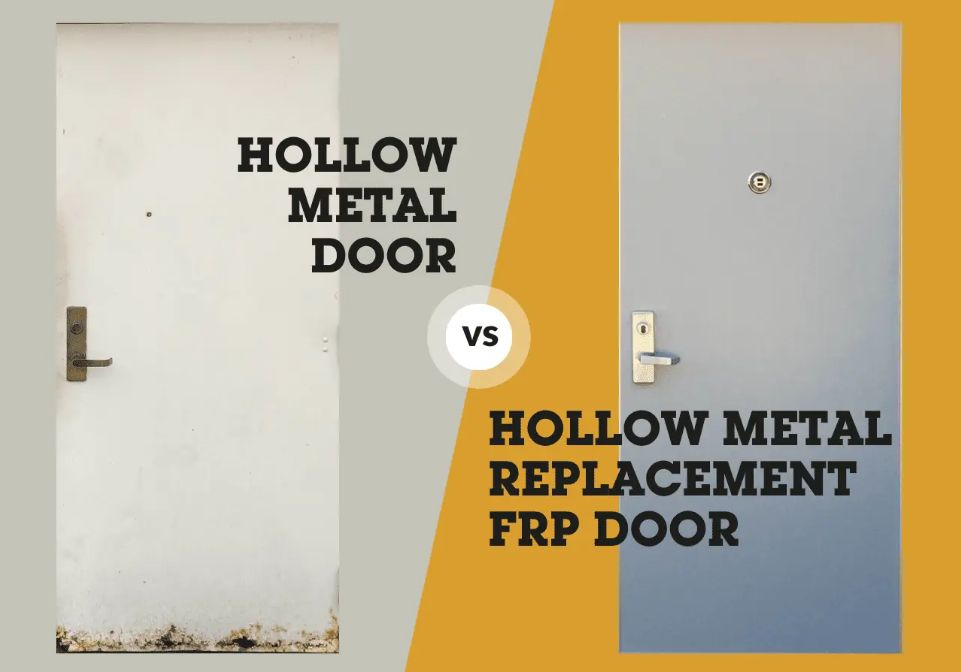
The primary weakness of steel is rust. If the paint finish is chipped or scratched—a common occurrence in high-traffic areas—moisture from rain and snow can lead to corrosion over time.
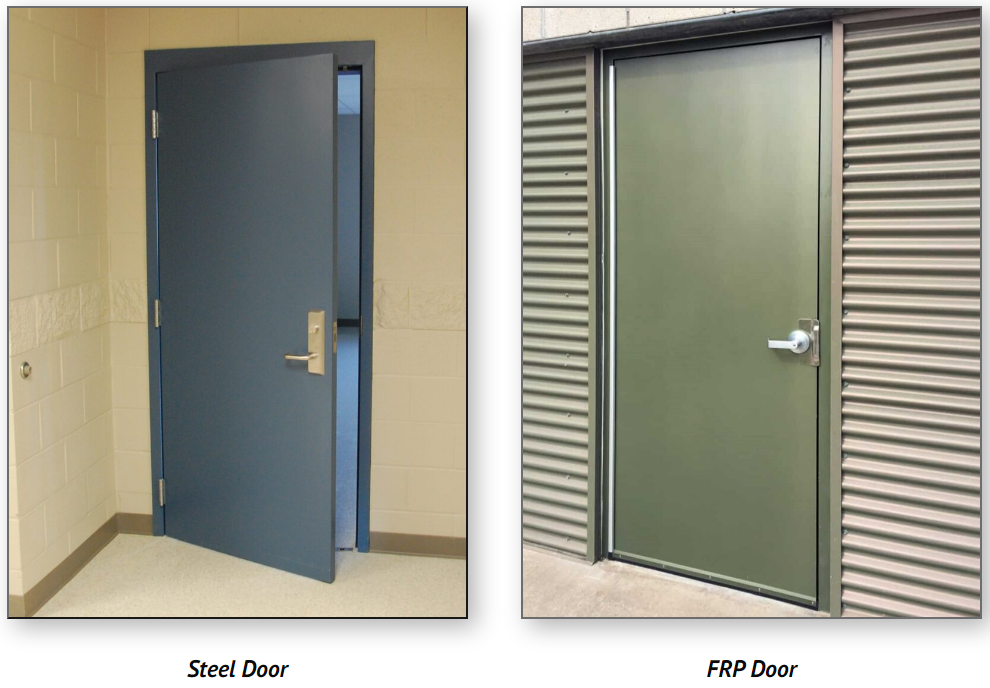
While not as common, FRP doors are a specialized solution engineered to thrive where steel struggles. Think of them as the ultimate problem-solver for specific environments.
Pros of FRP Doors:
100% Waterproof: This is the biggest advantage in the FRP vs hollow metal doors debate. FRP doors will not rust, corrode, warp, or peel, even with constant exposure to moisture.
Chemical Resistance: They are highly resistant to cleaning chemicals, salt, and other corrosive agents, making them ideal for industrial or sterile applications.
Easy to Clean: The non-porous surface is easy to sanitize, a major benefit for food service and healthcare facilities.
Lightweight: FRP doors are lighter than steel, which can reduce strain on the frame and hardware over time.
Cons of FRP:
Higher Initial Cost: FRP doors typically have a higher upfront cost than standard hollow metal doors.
Lower Fire Rating: While fire-rated versions are available, they generally do not reach the 3-hour rating of steel.
When budgeting for a commercial door project in Ohio, understanding the total cost of ownership is more important than just the upfront price. Heres how FRP and hollow metal doors compare:
Upfront Cost: Hollow metal doors are generally 15-30% less expensive than FRP doors of comparable size and fire rating. A standard 3-0 x 7-0 hollow metal door typically ranges from $250-$500, while an equivalent FRP door runs $400-$700.
Maintenance Cost: This is where FRP doors gain an advantage in Ohios climate. Hollow metal doors exposed to rain, snow, and road salt require periodic repainting and rust treatment. Over 10 years, maintenance on a hollow metal exterior door can add $500-$1,000 to the total cost. FRP doors require minimal maintenance — occasional cleaning is usually sufficient.
Replacement Frequency: In harsh environments (loading docks, swimming pools, coastal areas), a hollow metal door may need replacement in 10-15 years due to corrosion. An FRP door in the same environment can last 25+ years.
For Ohio businesses, the choice often comes down to location: interior applications favor hollow metal for its lower upfront cost, while exterior and moisture-prone applications favor FRP for its long-term savings.
Both FRP and hollow metal doors are available in fire-rated configurations, but there are important differences to understand for Ohio building code compliance:
For Ohio projects requiring 2-hour or 3-hour fire ratings, hollow metal is the clear and sometimes only choice. For standard 20-minute, 45-minute, or 60-minute rated openings, both materials are viable options.
When planning your project, consult with your architect and door supplier to confirm which fire ratings are required for each opening. Prime Door can help you select the right door type for every opening in your Ohio facility.
Based on our 25+ years of experience installing commercial doors throughout Ohio, here are our recommendations by application:
Choose Hollow Metal When:
Choose FRP When:
Need help deciding? Contact Prime Door for a free consultation. We will assess your specific openings and recommend the best door type for your Ohio facility.
The choice depends entirely on the location and application:
For most exterior and interior doors where security and fire rating are top priorities, Hollow Metal remains the cost-effective and powerful choice. Regular maintenance of the paint finish is key to preventing rust.
For any location with high moisture or corrosive elements—such as a car wash, water treatment plant, pool area, or food processing facility—FRP is the clear winning choice and a wise long-term investment.
At Prime-Door, we provide expert guidance to help you select the perfect door system for your needs and budget. We understand the unique challenges of FRP vs Hollow Metal Doors our Ohio weather presents and can help you choose a solution that lasts.
Ready to find your winning choice?